

E. COLI DISEASE IN PIGLETS – A MAJOR THREAT CAUSING SEVERE LOSSES IN LIVESTOCK PRODUCTION
E. coli disease in piglets has long been a constant concern for livestock farmers. It is one of the most common causes of diarrhea in newborn piglets and weaned piglets, leading to increased mortality rates, reduced growth performance, and significant economic losses for farms. Not only does it affect animal health, but E. coli disease in piglets also increases treatment costs and prolongs the time to market.
Among many gastrointestinal disease agents such as viruses, parasites, metabolic disorders, or unfavorable environmental conditions, E. coli bacteria account for approximately 23–30% of diarrhea cases in piglets. Therefore, E. coli disease in piglets is considered one of the biggest challenges for pig farms today, especially during the neonatal and post-weaning stages.
E. coli and its relationship with piglets
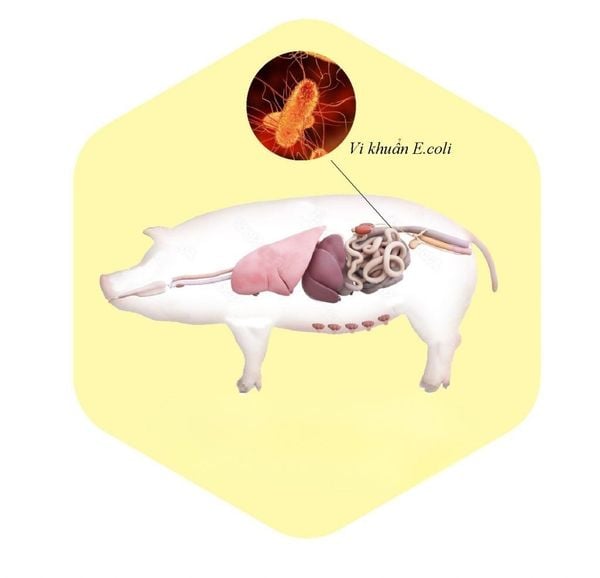
E. coli (Escherichia coli) is a bacterium that normally resides in the intestinal tract of pigs and plays a certain role in the gut microbiota. However, when immunity is weakened or the gut microbial balance is disrupted, pathogenic strains of E. coli can multiply rapidly and become dangerous agents for piglets.
The disease commonly occurs during two highly sensitive stages:
- Suckling piglets (especially during the first week after birth)
- Weaned piglets
In addition to diarrhea, E. coli can also cause edema disease in post-weaning piglets, with very high mortality rates if not detected and treated promptly.
According to Goodman (2021), economic losses caused by E. coli diarrhea are extremely large. Not only does it increase morbidity and mortality rates, but it also reduces growth performance, prolongs the raising period, and increases treatment costs. For a 500-sow farm, a 2–7% mortality rate in weaned piglets can cause losses of up to 20,000 USD per year.
E. coli in the intestinal tract can flare up into disease outbreaks in piglets, causing diarrhea and edema when immunity is weakened.
Typical symptoms of E. coli disease in piglets
1. Diarrhea form
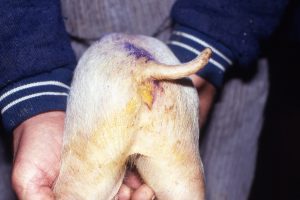
E. coli diarrhea is commonly seen in newborn and suckling piglets.
Typical signs include:
- Watery diarrhea, white or light yellow feces
- Foamy, foul-smelling stool
- Vomiting, reduced suckling
- Rapid dehydration causing sunken abdomen and eyes
- Bluish skin, rough hair coat
- Weakness, lying close together, reduced movement
If not treated promptly, piglets may die within 24–48 hours due to severe dehydration and electrolyte imbalance.
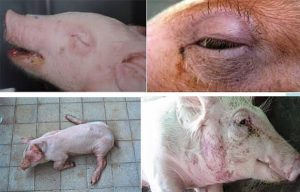
2. Edema disease form
Edema disease usually appears 1–2 weeks after weaning, especially in piglets that are otherwise healthy and fast-growing.
Common symptoms:
- Lethargy, reduced reflexes
- Wobbling, loss of balance
- Seizures, lying down unable to stand
- Swelling of eyelids, tongue, throat, or vulva
- Coma and sudden death
In many cases, piglets may still eat normally but suddenly collapse, convulse violently, and die within a short time. Once neurological signs appear, mortality can reach 100%.
Causative agents of E. coli disease in piglets
E. coli is a Gram-negative rod-shaped bacterium that can grow easily on common culture media such as EMB or MacConkey agar.
Its pathogenicity mainly comes from adhesion factors and specific toxins.
E. coli causing diarrhea
Strains causing diarrhea typically carry adhesion factors such as:
- F4 (K88)
- F5 (K99)
- F6 (987P)
- F41
These factors allow bacteria to attach firmly to the small intestinal mucosa. After attachment, the bacteria produce enterotoxins such as:
- ST (Heat-Stable Toxin)
- LT (Heat-Labile Toxin)
These toxins disrupt water and electrolyte absorption, leading to acute diarrhea, severe dehydration, and potentially rapid death in newborn piglets.
E. coli causing edema disease
Strains causing edema disease typically carry the F18 adhesion factor and produce Shiga toxin type 2e (Stx-2e).
After entering the bloodstream, Stx-2e damages blood vessel walls, causing fluid leakage into tissues and resulting in edema, especially in the head and central nervous system. This leads to neurological signs and high mortality.
In addition, E. coli releases endotoxins, increasing systemic inflammatory responses and worsening disease severity.
Sources of infection and risk factors
The main source of E. coli infection is feces from carrier sows. The bacteria can survive long in the farm environment and easily infect piglets immediately after birth.
High-risk periods:
- Piglets under 7 days old
- Especially within the first 3 days after birth
Risk factors include:
- Damp housing conditions
- Low temperatures
- High stocking density
- Abrupt weaning
- Stress from transport or feed changes
- Poor sanitation and disinfection
Incidence can reach up to 100%, while mortality ranges from 5–100% depending on strain virulence and management conditions.
EFFECTIVE PREVENTION OF E. COLI DISEASE
Prevention is always the most cost-effective approach in livestock production. Since E. coli is always present in the environment and gut, control measures must be applied comprehensively from hygiene to care and immunity enhancement.
1. Hygiene and disinfection of housing
- Regular cleaning and disinfection of all farm areas
- Special attention to farrowing and nursery pens before introducing animals
- Keep floors dry, clean, and well-ventilated
- Wash sows thoroughly 1–2 days before farrowing
- Clean and disinfect the genital area to reduce infection risk in newborn piglets
2. Care of newborn piglets
Ensure early colostrum intake
Colostrum contains high levels of antibodies that protect piglets against E. coli and other pathogens in the first days of life.
Maintain proper temperature
Piglets must be kept warm continuously using heat lamps or heating systems to reduce stress and improve natural immunity.
Iron injection at the right time
Iron injection at around 3 days of age helps prevent anemia and supports healthy growth.
Control coccidiosis
Prevention of coccidiosis from 3–5 days of age helps maintain gut health and reduces intestinal damage that facilitates E. coli infection.
Role of immunity in preventing E. coli disease
E. coli disease in piglets is one of the most dangerous infectious diseases in modern pig farming. With its ability to cause acute diarrhea, edema disease, and high mortality rates, it significantly reduces productivity and causes major economic losses.
To effectively control E. coli disease in piglets, it is necessary to combine hygiene and disinfection, proper piglet care, environmental management, and active immunity development. Good prevention from the beginning is the most sustainable solution to protect herds and improve farming efficiency.